Comparison Guide Acupuncture vs Dry Needling Examples
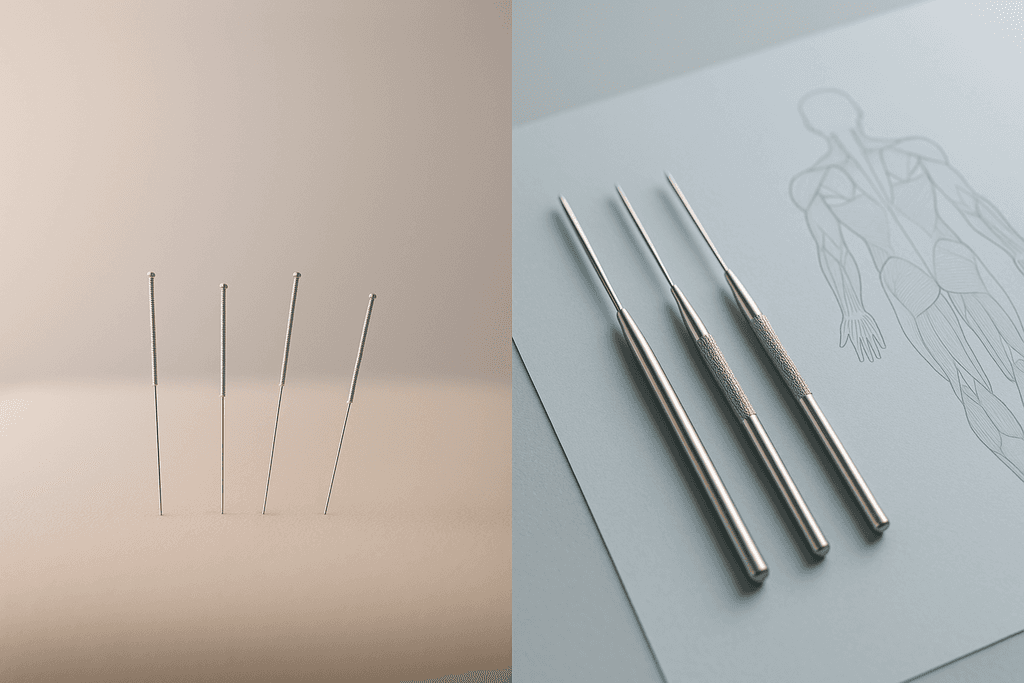
Acupuncture vs dry needling examples show key differences in technique, training, and treatment. Learn which approach fits your pain relief needs.

You walk into a clinic with shoulder pain, and the practitioner pulls out a thin needle—but is it acupuncture or dry needling? Many people think these treatments are the same thing because they both involve needles, but they come from completely different worlds with different goals. Understanding acupuncture vs dry needling examples helps you choose the right treatment for your specific health needs, whether you're dealing with chronic pain, sports injuries, or stress-related conditions.

Where These Techniques Come From

Most people think acupuncture and dry needling are basically the same thing because they both use thin needles. But these two practices come from completely different worlds and have almost nothing in common except the tool they use. One has roots stretching back thousands of years, while the other is barely older than your grandparents. Understanding where each technique comes from helps explain why they work so differently and why the training to perform them varies so much.

background section

background section

Ancient Roots vs Modern Development

Acupuncture started in China more than 3,000 years ago as a core part of Traditional Chinese Medicine. Ancient practitioners believed that energy called "qi" flows through specific pathways in the body called meridians. When this energy gets blocked or unbalanced, health problems show up. Acupuncture needles placed at specific points along these meridians help restore the natural flow of energy and bring the body back into balance.

Dry needling, on the other hand, showed up in the 1940s when Western doctors started experimenting with needles to treat muscle pain. It focuses entirely on trigger points, which are tight bands of muscle that cause pain. There's no mention of energy flow or meridians. The technique is based purely on Western anatomy and physiology, targeting specific muscle knots to release tension and reduce pain.


This video breaks down the key differences between these two approaches in a way that's easy to understand.

Training and Education Requirements

The education gap between these two practices is huge. Acupuncturists spend years learning their craft, while dry needling practitioners often complete their training in a matter of days. At Clinic Eight, our approach combines extensive training in Traditional Chinese Medicine with modern medical insights to provide comprehensive care for conditions ranging from chronic pain to ADHD support.

Here's what the training looks like for each practice:

  • Acupuncturists complete 3-4 years of graduate-level education in TCM theory, diagnosis, and treatment
  • They study anatomy, physiology, herbal medicine, and traditional diagnostic methods
  • Most programs require at least 1,800 hours of training before graduation
  • Practitioners must pass national board exams and maintain state licensure

Dry needling training tells a different story:

  • Physical therapists, chiropractors, or other healthcare providers take short certification courses
  • Training programs range from 24 to 54 hours, often completed over a weekend
  • No comprehensive study of energy systems or holistic health approaches
  • Regulatory requirements vary widely by state, with some states not regulating it at all

Regulatory Standards and Oversight

The rules governing these practices are completely different. Acupuncture is a licensed healthcare profession in most states, with strict standards for education, testing, and ongoing practice. Practitioners need specific credentials and must follow detailed safety protocols. The National Certification Commission for Acupuncture and Oriental Medicine sets the standards that most states use for licensing.

Dry needling exists in a gray area. Some states allow it, some ban it, and others haven't decided yet. When it is allowed, it's usually treated as an add-on skill for other healthcare providers rather than a standalone practice. This creates confusion about who can perform it and what training they actually need.

Aspect Acupuncture Dry Needling
Origin Date Over 3,000 years ago 1940s
Training Hours 1,800+ hours 24-54 hours
Education Level Master's or Doctoral degree Weekend certification
Licensing Required in most states Varies by state
Theoretical Basis TCM meridian system Western trigger points

If you want to learn more about how dry needling compares to other pain relief options, this resource explains the differences between various treatment approaches. The depth of training matters because it affects how practitioners understand your body and what they can treat beyond just muscle pain.

Real Treatment Examples for Chronic Pain

Most people think needles are needles, but the way acupuncture and dry needling treat your lower back pain couldn't be more different. When someone walks into our clinic with chronic lower back pain, an acupuncturist looks at the whole picture. We check your tongue, feel your pulse, and ask about your sleep, digestion, and stress levels. That's because in Traditional Chinese Medicine, lower back pain often connects to kidney meridian imbalances, and the treatment might not even touch your back.

At Clinic Eight, we use Dr. Tan's Balance Method, which means we often treat pain without needling the painful area at all. For lower back pain, we might place needles in your wrists or ankles on opposite limbs to balance the meridians. It sounds strange, but patients feel relief within minutes.

  • Acupuncture addresses kidney meridian imbalances and uses distal points away from the pain
  • Dry needling targets specific trigger points directly in the lumbar muscles
  • Acupuncture considers whole-body patterns and root causes beyond the pain location
  • Dry needling focuses on releasing muscle knots and tension at the pain site

A dry needling practitioner takes a completely different approach. They palpate your lower back muscles, find the tight bands and trigger points, then insert needles directly into those spots. The goal is to get a twitch response that releases the muscle knot. It's more like a deep tissue massage with needles, focusing purely on the mechanical problem in your muscles.

Treatment duration tells another part of the story. Acupuncture sessions typically last 30 to 60 minutes with needles retained while you rest. You might need weekly treatments for a few weeks, then spread them out as your body rebalances. Dry needling sessions are often shorter, maybe 15 to 30 minutes, but some people need them more frequently because they're only addressing the muscle tension, not the underlying pattern causing it.


Sports Injury Recovery Examples

Athletes deal with injuries differently than the average person because they need to get back to peak performance, not just pain-free daily activities. Tennis elbow is a perfect example to compare these two approaches. When a tennis player comes in with lateral epicondylitis, the acupuncture treatment might seem counterintuitive at first. We often needle the opposite knee or ankle to balance the meridians that run through the elbow, plus we add points to reduce inflammation throughout the body.

The acupuncture approach addresses why the injury happened in the first place. Maybe there's too much heat and inflammation in your system, or your body isn't recovering well between matches because of stress. We treat the whole pattern, which helps prevent re-injury once you're back on the court.

Approach Primary Focus Recovery Timeline Re-injury Prevention
Acupuncture Systemic balance 2-6 weeks High
Dry Needling Muscle release 1-4 weeks Moderate

Dry needling for tennis elbow goes straight to the forearm muscles. The practitioner needles the extensor muscles that attach to the lateral epicondyle, trying to release the chronic tension causing your pain. It often provides quick relief, which athletes love, but it might need frequent repetition if you don't address the movement patterns or training load that caused the problem.

Many athletes actually use both methods together. They get dry needling for immediate muscle release before a competition, then use acupuncture for deeper healing and to manage the stress and performance anxiety that comes with competitive sports. Our integrative approach at Clinic Eight means we can discuss which method makes sense for your specific situation and timeline.

Stress and Whole Body Health Examples

Here's where the differences between acupuncture and dry needling become crystal clear. If you walk into a dry needling clinic complaining about migraines, digestive issues, or anxiety, they'll probably refer you elsewhere because dry needling only treats musculoskeletal conditions. It's designed for muscles, tendons, and trigger points, nothing more. But these are exactly the conditions where acupuncture shines.

Take migraines as an example. In Traditional Chinese Medicine, we often see migraines as liver qi stagnation combined with stress patterns. The treatment includes points on the feet, hands, and legs to smooth liver qi and calm the nervous system. We might add points for your specific symptoms, like if your migraines come with nausea or light sensitivity.

  • Acupuncture treats migraines by addressing liver qi stagnation and stress patterns
  • Digestive issues respond to spleen and stomach meridian balancing
  • The nervous system, hormonal balance, and emotional well-being all improve with acupuncture
  • Sleep disorders, anxiety, and fatigue have no dry needling equivalent treatment

Digestive problems are another area where acupuncture works but dry needling doesn't apply. Someone with IBS or chronic bloating gets treatment focused on the spleen and stomach meridians. We're working with your body's energy systems, not just poking muscles. The fundamental difference in philosophy means acupuncture can address conditions throughout your entire body.

At Clinic Eight, our integrative approach combines the wisdom of Traditional Chinese Medicine with modern medical understanding. This means we can treat your chronic pain, but we can also help with your sleep problems, manage your stress levels, and support your overall health in ways that go far beyond what dry needling offers. The needles might look similar, but what we're actually doing with them is completely different.

analysis section

analysis section

Which Approach Fits Your Needs

The choice between acupuncture and dry needling isn't just about needles going into your skin. It comes down to what you're trying to fix and how deep you want that fix to go. Most people walk into a clinic thinking both treatments are basically the same thing, but the differences matter more than you'd expect. Your health goals, the type of problem you're dealing with, and even your insurance coverage all play a role in which path makes sense for you. Understanding these practical considerations helps you avoid wasting time and money on the wrong approach.

Matching Treatment to Your Health Goals

If you're dealing with a tight muscle or a specific trigger point that's causing pain, dry needling might get you faster relief. It targets those knots directly and can loosen things up in just a few sessions. But here's where it gets interesting: acupuncture addresses the underlying patterns that created the problem in the first place. At Clinic Eight, we use techniques like Dr. Tan's Balance Method and Neuro-meridian acupuncture to treat not just the symptom but the root cause.

  • Musculoskeletal pain only: Dry needling may work faster for isolated muscle issues
  • Chronic conditions with multiple symptoms: Acupuncture offers broader therapeutic benefits
  • Stress, sleep, or digestive issues alongside pain: Acupuncture treats the whole system
  • Sports injury recovery: Both can help, but acupuncture supports overall healing

Practitioner Credentials Matter More Than You Think

Not all needle practitioners have the same training. Dry needling can be performed by physical therapists with minimal additional certification, sometimes just a weekend course. Acupuncturists like Rob Weingeist at Clinic Eight hold doctoral degrees in Acupuncture and Chinese Medicine, representing thousands of hours of specialized training.

  • Acupuncturists: 3-4 years of graduate-level education in needle techniques and diagnosis
  • Dry needling practitioners: Often 20-50 hours of additional training beyond their primary license
  • Safety considerations: More extensive training typically means better outcomes and fewer complications

Decision-Making Checklist

Before booking your first appointment, run through these questions to figure out which treatment aligns with your needs. The answers will point you in the right direction faster than any online research.

  1. Is your problem limited to one specific muscle or trigger point, or do you have multiple symptoms?
  2. Are you looking for quick relief or long-term resolution of underlying issues?
  3. Does your insurance cover acupuncture, dry needling, or both?
  4. Do you want treatment that addresses stress, sleep, or other whole-body concerns?
  5. What level of practitioner training makes you feel most comfortable?

The Cost and Coverage Reality

Insurance coverage varies wildly between these two treatments. Many insurance plans now cover acupuncture for chronic pain, while dry needling coverage depends on whether it's billed under physical therapy. The integrative model at Clinic Eight combines classical techniques with modern medical insights, which means treatments are designed with both effectiveness and practical healthcare navigation in mind. According to research on treatment differences, understanding these distinctions helps patients make informed choices about their care.

  • Acupuncture: Increasingly covered by major insurance plans for pain management
  • Dry needling: Usually billed under physical therapy, coverage depends on your specific plan
  • Out-of-pocket costs: Vary by provider and location, but acupuncture often offers package deals

Making Your Choice Clear

The acupuncture vs dry needling examples we've covered show two very different approaches to healing, even though both use thin needles. Acupuncture looks at your whole body and aims to fix the root problems causing your symptoms, while dry needling focuses mainly on tight muscles and trigger points. One comes from thousands of years of medical tradition with extensive training requirements, and the other is a newer technique that physical therapists and chiropractors can learn in weekend courses.

Your choice really comes down to what you're looking for. If you want quick relief for a specific muscle knot, dry needling might seem appealing. But if you're dealing with chronic pain, stress, sleep problems, or health issues that keep coming back, you probably need something that addresses why these problems keep happening in the first place.

At Clinic Eight, we use authentic acupuncture with techniques like Dr. Tan's Balance Method and Neuro-meridian acupuncture to treat the whole person, not just isolated symptoms. Our approach combines classical Chinese medicine with modern medical insights, which means you get care that's both time-tested and informed by current research.

The training difference matters too. Rob Weingeist holds a doctoral degree in Acupuncture and Chinese Medicine, which requires years of study compared to the brief certification courses for dry needling. That depth of knowledge makes a real difference when someone is trying to figure out what's actually causing your health problems.

Still have questions about which approach fits your situation? The answers below might help you decide what's right for your specific needs.

Common Questions About These Treatments

People often have similar concerns when deciding between acupuncture and dry needling. Both treatments use needles, but the experience and approach differ in ways that matter for your comfort and results. Here are the questions we hear most often at Clinic Eight, along with straightforward answers to help you make an informed choice.

Does acupuncture or dry needling hurt more?

Dry needling typically causes more discomfort because practitioners intentionally trigger muscle spasms to release tension. You might feel a sharp twitch or cramping sensation that lasts a few seconds. Acupuncture uses thinner needles and gentler insertion techniques, so most people describe it as a mild tingling or dull ache. At Clinic Eight, we use techniques like Dr. Tan's Balance Method that often work without needling directly into painful areas.

Can physical therapists perform acupuncture?

Physical therapists can perform dry needling after completing short certification courses, but they cannot legally practice acupuncture in most states. Acupuncture requires extensive training in Traditional Chinese Medicine, typically involving a master's or doctoral degree with thousands of clinical hours. Licensed acupuncturists like those at Clinic Eight study meridian theory, diagnostic methods, and treatment strategies that go far beyond muscle trigger points.

Which treatment works faster for pain relief?

Dry needling often provides immediate relief for acute muscle pain because it directly targets the tight band causing discomfort. However, the relief may be temporary if underlying imbalances aren't addressed. Acupuncture might take a few sessions to show full results, but it tends to provide longer-lasting improvements by treating root causes rather than just symptoms. Many patients notice changes after their first acupuncture session, especially for conditions like stress or digestive issues.

Is one safer than the other?

Both treatments are generally safe when performed by trained practitioners, but acupuncture has a longer safety track record with more comprehensive training requirements. Dry needling carries a slightly higher risk of soreness and bruising because of the aggressive muscle manipulation involved. Acupuncturists complete more extensive education in needle safety, anatomy, and contraindications.

Can you combine acupuncture and dry needling?

Some practitioners offer both approaches, though they're based on completely different philosophies. At Clinic Eight, we focus on acupuncture and TCM techniques that address both local symptoms and whole-body patterns. This integrative approach often eliminates the need for more aggressive interventions while providing comprehensive care for chronic conditions, stress management, and overall wellness.

How do I know which treatment is right for my condition?

Consider your health goals and the nature of your condition. If you have a simple muscle knot from overuse, dry needling might offer quick relief. For chronic pain, complex conditions, stress-related issues, or concerns like ADHD support and eye health, acupuncture provides a more comprehensive solution. A consultation with a licensed acupuncturist can help you understand which approach aligns with your specific needs and long-term wellness goals.

Previous
Previous

5 Ways Acupuncture Iowa City Reduces Back Pain Fast

Next
Next

Three Steps Toward Less Anxiety With Iowa City Acupuncture